
We’re back fresh from Atlassian Team ’26 Europe, and what a week it was.
Much of the conference (unsurprisingly) focused on how teams can move forward with agentic AI in a meaningful and secure way. Think agent identity management, increased compliance with AI legislation, and practical internal guardrails.
It’s this that we’ll focus on in this Atlassian Team ’26 Europe recap (and which is fuelling a lot of conversation here at AC HQ!).
Here are the steps Atlassian has taken, and tools it has provided, to enable teams to embed AI agents into fully managed, accountable virtual teammates.
The 3 Cs that will shape your use of AI
During the opening keynote, Atlassian Co-Founder and CEO, Mike Cannon-Brookes, shared the three elements shaping Atlassian’s development and use of agentic AI: Context, collaboration and confidence.
Context
For long-term agentic AI success, what model organisations are using isn’t the point. What we should all be focusing on instead is the context it draws from. As Cannon-Bookes said: ‘The model is the engine, context is the fuel.’
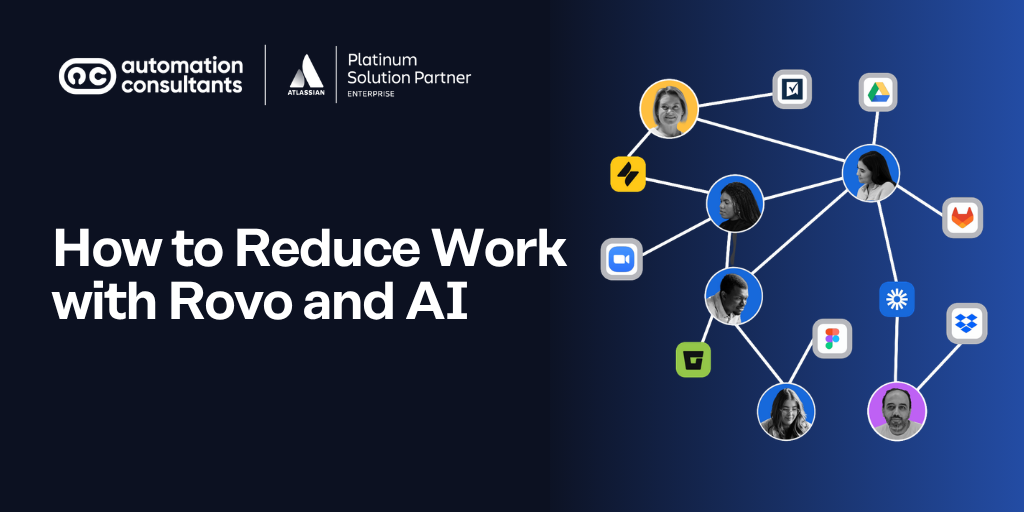
Those of you already working within the Atlassian Cloud system of work will already be familiar with the Teamwork Graph, a living map of knowledge underpinning your Atlassian tools. Rovo draws on this for your organisation’s unique context – teams, projects, roles, and so on.
Now, the Atlassian Teamwork Graph has been updated to map an even greater breadth of context, which is continually updating and evolving in line with your organisation.
💡 Did you know?
In the last year, Atlassian has doubled the number of objects and relationships in the Teamwork Graph – taking the total number up to 250 BILLION.
Alongside this, Atlassian has released 80+ new connectors to third-party tools and knowledge sources, from Zoom to Google Identity.
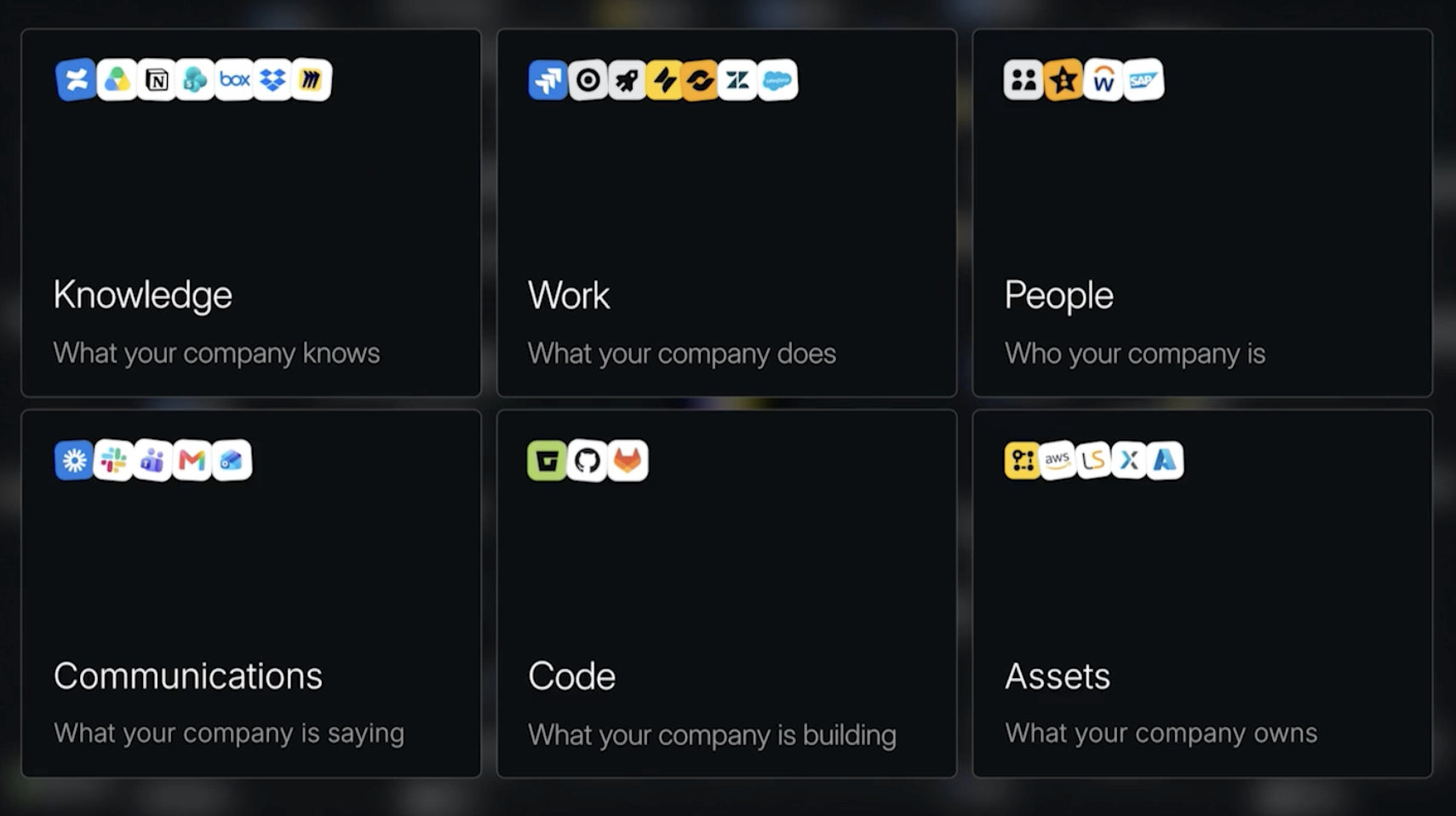
What types of knowledge is included in the Atlassian Teamwork Graph?
- Knowledge context
- Work context
- People context
- Comms context
- Asset context
- Code context (New! The Teamwork Graph can now read source code. Currently in Beta.)
- Structured data context (New! The Teamwork Graph can now pull context from your data lakes and warehouses)
The benefit of this is that any actions Rovo performs – tasks it completes, knowledge it surfaces, answers it provides – are based on an increasingly rich layer of context, ensuring greater relevance and value. Rovo is also continually learning, working in self-reinforcing loops. So each time it takes action, that relevance and value will improve.
💡 The OpenAI and Atlassian partnership
On the topic of context, Atlassian announced a significant new partnership with OpenAI at Team ’26 EU.
‘Bringing together OpenAI’s frontier intelligence with Atlassian’s Teamwork Graph’, the partnership means that OpenAI-powered AI experiences and agents across the Atlassian ecosystem can now draw on Teamwork Graph context.
It also ensures that queries or tasks run in Chat GPT or Codex are informed by the Teamwork Graph too.
We’ll be following this partnership closely here at AC.
Want to accelerate value across your organisation with Rovo – but don’t have a practical framework to drive it? Or struggling with AI adoption across teams? Here’s how AC can help you make AI operational.
Collaboration
Since Rovo was first introduced a few years ago, Atlassian has been firm in its line that AI agents will not replace humans, but work alongside them as teammates.
This was reinforced at the Team ’26 Europe event, as Atlassian introduced a significant step forward in agent-human collaboration. Enter AMP: Agentic Multiplayer Protocol.
💡 What is Atlassian’s AMP?
AMP (Agentic Multiplayer Protocol) is Atlassian’s way of enabling humans and agents to work together more securely and effectively.
It comprises three layers:
- Embedded collaboration, such as mentioning an agent directly in a Confluence document or briefing via a Loom video – as you would with a human teammate. This can be real-time or asynchronous collaboration.
- Identity management, including clear agent owners and attributions.
- Strengthened governance, from agent permission management to full activity audits so you can track which agent (or human) has touched what.
Atlassian describes the newly launched AMP as the ‘foundation for connected human-agent teamwork’.
AMP is now generally available. Find out more here.
Increasingly, we’re working with our clients to embed practical guardrails and embed agentic AI governance measures across their workflows and tooling. It’s a vital part of embracing human-agent collaboration, and we’ll be watching Atlassian’s own developments in this space with interest.
Confidence
Following on neatly from our last point, Cannon-Brookes was clear on the importance of instilling a sense of safety across teams, particularly in relation to the pace of progress around agentic AI.
There is an undeniable tension between innovation and the uncertainty it can bring. In response to this, at Team ’26 EU, Atlassian announced new measures to enhance AI governance and security. These include:
- Further Atlassian Guard enhancements, including sensitive data detection (only available in Guard Premium).
- EU AI Inference, which drew a loud cheer from the (predominantly European) crowd during the live keynote!
- Compliance with AI and/or regional legislation, including the EU AI Act and ISO 42001 for Rovo.
Looking for agentic AI inspiration? From Rovo to AWS Strands, and from custom Forge apps to Claude agents, browse our AI Agent case studies for real-world success stories.
An agentic estate that yields real-world outcomes
One of our highlights was the incredibly popular session run by Hassan Khadra, our very own Senior Project Manager and Agile Coach here at AC.
Hassan showcased the 12-agent estate he built with Claude with Rovo, designed to free up PMO capacity by retrieving and surfacing data on everything from risks to status reports.
🌟 Agentic AI delivering outcomes
In the six months since this pilot has been running, Hassan has freed up 25% capacity, and increased throughput x 3 – without additional resource.
Crucially, Hassan shared invaluable advice for attendees wanting to set up their own agentic workflows and estates.
- Start off small. Hassan began with wanting to manage risks more effectively as, in his own words, he was ‘dropping the ball’. So he started off with a single risk-management agent, and then grew the concept, adding further agents over time.
- Embed a ‘proper’ framework. Vital for establishing strong foundations for future growth.
- Keep a human in the loop. Even the most powerful network of AI Agents don’t have the nuance and tacit understanding of how humans work. So you need to keep people in the loop to sign off on decisions, apply human judgement and read the room.
“I managed to create a solution that extends my reach and capacity to manage the governance and reporting requirements you’d expect from any solid PMO. It learned how I work, and grew from my and the team’s feedback to become less prone to errors, more efficient, and more productive. Getting back a quarter my time allows me to worry less about the admin work and focus more on being me – the human – with my team, my company and my clients.” – Hassan Khadra
Got an agentic AI use case, but unsure where to go next?
If Atlassian Team ‘26 Europe left you feeling inspired, why not book a discovery call with one of our specialist consultants?
We’re adept at helping teams like yours to really shape and define their cases, reviewing your underlying processes and automations, and identifying integration opportunities for even greater value.
Start with a free discovery call today!
Written by Hannah Vincent
A skilled writer and content creator with 15 years' experience producing technical and editorial content featured everywhere from national media to specialist publications. At Automation Consultants (AC), Hannah works closely with tech leaders, consultants and software engineers to turn complex technical expertise, implementation experience, and emerging industry trends into practical, accessible insight.